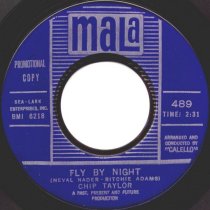
|
S'POP: So, you're a young kid from
Yonkers … whereabouts is Yonkers?

CHIP TAYLOR: Yonkers is just outside of New York City
- it's about 45 minutes outside the city, adjacent to it.
We were towards the southern part of Yonkers, a kinda lower-middle
class area where we grew up. It was a good area - good buddies,
good families around us. Nice memories, but a little tougher
than the area where we ended up moving to when I was 11 or
so. Yonkers was great!
S'POP: Were you a musical family?
CHIP TAYLOR: No.
S'POP: What made you want to become
a singer?
CHIP TAYLOR: I always liked music in the house. I gravitated
towards it more than the rest of the family. My dad was a
golf professional; he was a man of the arts in his spare time
- he played Bing Crosby music, he loved Al Jolson, the Inkspots,
things like that. And he loved movies - we went to a lot of
movies when we were kids, whenever we could. My hardcore turn
towards music was when my dad and mom babysat me at a musical,
My Wild Irish Rose. I think I was about seven or eight. They
didn't have a babysitter, I didn't want to go to the show,
but when I went I was just mesmerised by the music, and I
remember going back in the car that night, I didn't want to
talk, I just wanted to keep the physical feeling I felt when
I heard the music sitting in the fourth row. So I felt, that
night, that something changed in me. I remember thinking to
myself, "I want to do this for the rest of my life."
Then it became country music a few years later. My dad and
mom used to let me stay up and listen to the radio. The local
stations I didn't like, so once in a while, late at night,
I could get stations I did like, like Wheeling, West Virginia,
every once in a while.
S'POP: How far away was that?
CHIP TAYLOR: I don't know. Usually when the weather was
bad I could pick it up. That was when I heard country music,
and that became really a thing for me. And, in and amongst
- I had a country music band in high school - I was listening
a lot to doo wop groups and the race records from down south
- Hank Ballard & the Midnighters, things like that. This
was just before the Moondog Show came to New York, so I was
really hungry for that stuff - the blues, any blues things
I could get. So, Southern blues and country music were really
important to me at the time, and it's that hybrid that I brought
into my writing that made me different than most of the writers
in New York.
Most of the writers in the Brill Building area - which were
three buildings: 1650 Broadway, which is where I was; 1619
Broadway, which was the Brill Building; and down one block,
on the East Side, was Screen Gems Music, where Carole King
and Gerry Goffin did their writing. So it was three buildings
that used the large term "Brill Building" - it wasn't
the Building, it was that area. All those writers were more
sophisticated than me. All those writers could write music,
but I couldn't. I didn't have anyone to write music. So I
was more of a blues/country guy in New York when all hell
was breaking loose and we were taking over the business. My
stuff sounded more like Memphis than it did New York. It was
all good times, we were all friends. I've great memories of
all those people.
S'POP: How did you end up on King
Records?
CHIP TAYLOR: Well, it was just before I made it as a writer.
I was in high school and I did these demos of some songs I
had just written for my country band. They were kind of rockabilly
things. [I was] 16, 15 maybe. We sent them around to all the
record labels - Dot Records, I forget what others. We just
sent them in a package, a professional package. We got a professional
"thank-you-but-no-thank-you" back from all of them.
My lead guitar player at the time, Greg Gwardyak - he's the
guy who taught me how to play guitar actually - he loved my
songs. I was less sure. I was a little more shy about them
than Greg. He had a passion about the music we were making.
He went door to door of the record companies in New York,
anybody he could find. One day he called me up, he said "I'm
sitting at King Records, Chip, talking to Henry Glover. He
says we're just what he wants, and he loves our band."
And that was it, I couldn't believe it. Here's the guy that
signed James Brown, Hank Ballard & the Midnighters, an
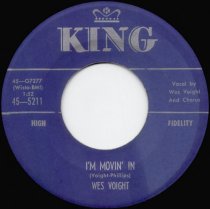
all-black label - he wanted us. So, we signed there, and that
was a great time, but it wasn't a lucrative time. There was
no money involved. The records were released and they really
didn't do anything. And the records were augmented. I think
it's a lesson. Henry loved the sound of our demos - it was
a real garage-sounding thing. I had a different name then,
I was Wes Voight & the Town And Country Brothers. When
it finally came down to the recording session - Syd Nathan,
the head man from Cincinnati, his daughter really liked my
pictures - Syd thought that I could be his big white hope.
He called Henry and said, "Henry, don't spare anything
with this kid, get the best musicians you can with them."
Henry liked the sound of what he heard, [but] he tried to
augment it a little bit. What it meant was my boys came to
the session, but they didn't play, and I always felt bad about
that. The players we did get were magnificent players: Mickey
"Guitar" Baker, from Mickey & Sylvia; Panama
Francis; I forget the bass player. They were nice guys. We
cut two or three sessions with them, and nothing really happened.
And then there was the question of whether the DJs could pronounce
my name correctly, and should we change the name? And at some
point, just as I was doing my last things for King Records,
they changed my name to Chip Taylor, and I think the first
record actually we put out was right after that, because we
decided not to go ahead. We had an offer from Warner Brothers
Records as well, and Warner Brothers sounded like it was a
better place for me, and I had no obligation anymore to stay
with King Records. I think they still wanted me but we shifted
to Warner Brothers, and had my first chart hit with me as
I am on Warner Brothers. That was a nice little record too,
with Stanley Applebaum producing it with strings, on a song
I really liked a lot. That song was at the time I just started
to get to know Burt Bacharach. I used to take my wife at the
time, Joan, down to a place called Chuck's Composite, where
Burt would play every night, or a few nights a week. We'd
go there to watch him play. I'm a really unsophisticated player,
but he loved the little flavour of me as I am. I was using
the suspension (sings an example) and he started writing a
lot of songs that were based similarly around that song (sings:
"Dearest, darling" from '24 Hours From Tulsa'). He wrote about
four or five songs that were around that simple thing I used
to do with the little suspension. I was very flattered. He
was a friend. Even though I had the hit record, on some areas
on the East Coast, it wasn't any moneymaking time for me.
It was still "How am I going to survive to stay in this business?"
And that's when I decided I was going to really make an effort
to write for other people, and see if I could survive the
business that way.
S'POP: Greg Gwardyak, he changed his
name too, to Greg Richards, and he wrote 'She Cried' with
Ted Daryll.
CHIP TAYLOR: Yes, Greg Richards. The story with that is,
we were all buddies. We had this band together - Greg Gwardyak
and Teddy Meister, who changed his name to Ted Daryll. We
played in high school, bars, Irish bars mostly. They were
great buddies. They had made a deal early on that whatever
they did they would do together. So 'She Cried' was the product
of their friendship, bringing them to the point that they
were both on that song. But Ted Meister wrote the song. Greg's
name was on it for all the camaraderie they had in the past
years. It was mostly a Ted song. If it wasn't for Greg Richards,
Greg Gwardyak, I would never have been here, sitting talking
to you - him walking the streets. He had a big heart. He wasn't
a great, great guitar player, but he had a lot of soul. So,
those demos that we did had Greg's stamp on them and they
were really nice demos. I have found a few of them. I'm trying
to find more. Before Greg passed away, he played with Tammy
Wynette. He wasn't a great player, but he had soul. He was
terrific. I owe a lot to Greg.
S'POP: So you turned your attention
to writing songs for other people. Were you freelance or did
you get signed by a publisher?
CHIP TAYLOR: I was freelancing. One of the first things
I did, I wrote a song that I needed a gut-string guitar player
on. I didn't know who the players were, so I asked some people
in town that I'd met, and they said, "There's a guy you
should talk to, Al Gorgoni. He's a very good guitar player,
he can play folk-ish kind of things, gut-string and classical
guitar." So I got hold of Al, and we've been friends
ever since. He played on my first demo, a thing called 'Springtime'.
I loved his playing and it was wonderful to do that demo with
him. You sold your song before you'd made a demo of it. You
walked into a publisher's office and you played it for him.
They said yes or no, and if they liked it, they gave you a
$25 or $30 advance, and you tried for a couple of weeks to
survive. That was one of the songs, so Al played on that.
S'POP: Did that get recorded?
CHIP TAYLOR: It ended up being recorded by the Browns,
my favourite group. That's the first one I remember Al playing
on. Before that I published things with a couple of other
companies. Right after I was signed to Warner Brothers I was
signed to MGM for a couple of records. They were bad records,
but during that period of time I wrote this song, 'He Sits
At My Table', which I really liked, and Willie Nelson recorded
it. That was one of the first things. I thought, "Holy
Christ, if I can get one of my heroes to record my songs!"
That was really big time for me. That got me to thinking I
should really do more of this. It was not a good recording,
I must say. It was the perfect song for Willie, but it was
one of these productions where they did some silly thing on
it to try to trick it up. The song sold itself, and they put
a high soprano voice on it, just singing over the top of the
second verse. It sounded silly to me. I think it's been released
on packages.
That was the start. Then this one guy I was publishing with
- I don't remember the name of the song, his name was Gerry
Teifer - he had a little company. Gerry had this little connection
in Nashville, and he was the one that got one of my songs
- maybe 'Springtime' - to Chet Atkins, who was producing records
for RCA at the time. One day Jerry showed me a note from Chet
saying, "I'm cutting that song you sent me. I have no idea
who Chip Taylor is. It's hard for me to believe he's from
New York, but wherever he's from I want to hear every song
he writes." And that was the start for me. Pretty much every
song I sent down there, he recorded with someone. He was the
head of A&R. Then, the next thing was, that little publisher
got took over as the head of CBS's publishing company, April
Blackwood Music, and I became one of the first staff writers.
And that was the first time somebody said to me, when they
had the contract in front of me, "Well, how many songs shall
we fill in here, that you have to give us a year?" I said,
"You tell me." I could have given them hundreds. They said,
"Ah, let's make it easy. Give us ten songs a year. That's
your obligation."
S'POP: What were you thinking? One
a week?
CHIP TAYLOR: They were just saying we're going to put
you in a position where there's no pressure on you. They didn't
want ten songs a year, they wanted a lot more, and they knew
they were going to get a lot more, but they didn't want any
pressure on me. They just wanted everything I'd write.
S'POP: Were you writing songs you
consciously thought of as country songs, or that could be
recorded as country songs? I tend to regard most of your compositions
from this period as R&B songs.
CHIP TAYLOR: In the beginning, when I was first signed,
they were country. And then, because I had R&B influences,
there were some R&B things that were floating in there,
but the majority of my successful ones were country. The combination
of my race records background and the country would lead me
to this Memphis thing that was kind of R&B. Even the rock
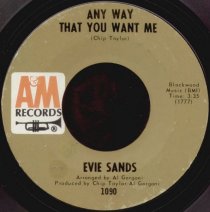
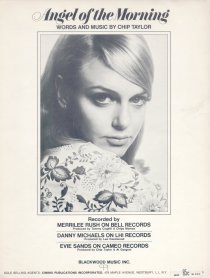
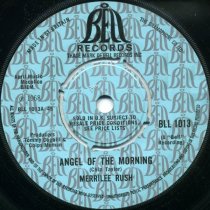
things, like 'Angel Of The Morning', 'Wild Thing' and 'Anyway
That You Want Me', had a Memphis sound to them. Nobody would
really guess that those songs were written by a New Yorker.
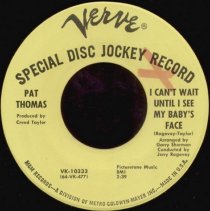
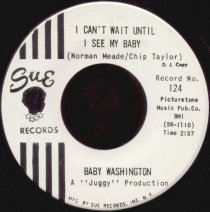
S'POP: Here's a good R&B one that
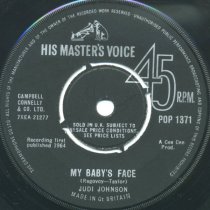
you wrote with Jerry Ragovoy, 'I Can't Wait Until I See My
Baby's Face' by Baby Washington on Sue Records.
CHIP TAYLOR: Juggy Murray was right upstairs in 1650 Broadway.
We were on the first floor in April Blackwood Music, and Juggy
Murray had his label upstairs. He was a hustling kind of guy.
Everybody knew everybody. The relationship with him was a
nice one. [Jerry Ragovoy] had done some work with Ted Daryll
- a demo of 'She Cried', originally with Ted singing - and
I had got to know Jerry then. He asked if I'd try to write
some things with him, and this was one of the first things
we wrote together. It was a little different writing with
Jerry - he was a keyboard guy, I wrote on guitar by myself,
I hardly wrote with anybody else. I wrote a little bit with
Al Gorgoni, he played guitar as well. It was fun writing with
Jerry - he was this funny kind of writer.
S'POP: Did you demo that song?
CHIP TAYLOR: No. The way we did things with Jerry, we
didn't really do demos. Jerry could write music and do arrangements.
He had a reel-to-reel tape recorder in his office, so our
demo would be made in his office. I'd go in and play and he'd
have the microphones there, and once we got the song down
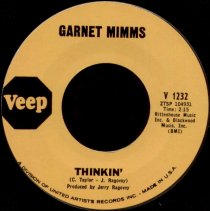
he'd record it right there. He'd have an idea that he was
going to be producing, because he was producing Garnet Mimms,
or whoever he was producing, he'd have an idea for them. So
he wouldn't need to give them a demo, he'd just play it for
them. Lorraine Ellison would come by and ask for a song …
S'POP: Did you generally attend the
sessions?
CHIP TAYLOR: No. Sometimes I did.
S'POP: 'I Can't Wait Until I See My
Baby's Face' is a big record over here. They love it on the
Northern Soul scene.
CHIP TAYLOR: Do they play Baby Washington or do they play
the other one?
S'POP: Pat Thomas, the jazz singer?
They play Baby Washington.
CHIP TAYLOR: They also play Dusty (Springfield)?
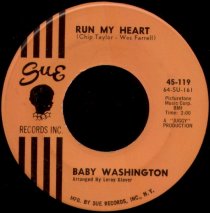
S'POP: They do. There's another one
by Baby Washington, 'Run My Heart', co-written with Wes Farrell.
You wrote a few songs with him.
CHIP TAYLOR: I have to be honest with you about Wes. He
was more of a businessman than he was anything else, and I
liked him. He was one of those real dark characters in the
business. He was a good guy to get you to do something, to
write something. He'd come down, "We gotta get a song
for so-and-so." He'd be upstairs, just near Juggy Murray's
- Wes was on the tenth floor, we were on the first floor,
Juggy was on the twelfth. Wes worked with Juggy Murray for
a while at Sue. He'd try to get you down there, and I couldn't
write with Wes, there was no inspiration. Wes was really a
cerebral guy. I'd just get in the corner and write something,
and because Wes had inspired the idea to write for this person,
his name is on a bunch of these songs. But I would say, for
the most part, I didn't consider Wes really a writer, even
though his name is on them. He was more of a good character,
a Damon Runyan kind of music business hustler.
S'POP: A Fixer.
CHIP TAYLOR: Fixer. He might change one word on the song,
and put his name on. He was a good guy. I liked him.
S'POP: Well, his name is on quite
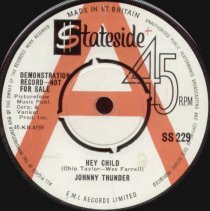
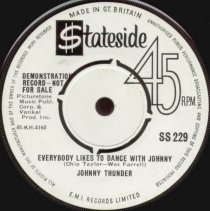
a few, like 'Hey Child' by Johnny Thunder. Remember Johnny
Thunder?
CHIP TAYLOR: Vaguely. You'll have to refresh my memory.
S'POP: He's the guy who did 'Loop
De Loop'. That was a bit of a dumb record, but 'Hey Child'
is great. He was on Diamond Records.
CHIP TAYLOR: I wish I could remember it, I don't remember
it. I think that was Wes's label, wasn't it?
S'POP: I always associate Diamond
with Teddy Vann.
CHIP TAYLOR: Yeah, maybe. They were all characters. 1650
Broadway housed all those guys: Teddy Vann, Wes Farrell. 1650
was a darker part of the music publishing. Except for April
Blackwood, which was a clean kind of place, the other guys
were mostly all hustlers in the R&B community.
S'POP: There seems to be some rivalry
between the people that worked at 1650 and the people who
worked over the road at 1619, the Brill Building.
CHIP TAYLOR: I didn't feel it. 1619 seemed to be more of a
Tin Pan Alley building that had switched now to rock'n'roll.
So you had your more sophisticated guys that were being allowed
in that place of Tin Pan Alley. Leiber & Stoller were
perfect examples. They could make the transition to show tunes,
to their dumbing down rock'n'roll things that they did. But
they had a good feel for that stuff anyway, they were pretty
sophisticated guys.
S'POP: So 1650 had the younger crowd
over there?
CHIP TAYLOR: It was more colourful. You had a lot of R&B
stuff, real serious R&B stuff going on in that building,
and you had more sophisticated R&B stuff going on in 1619
with Leiber & Stoller, and Jeff Barry, and Cynthia Weil.
Gerry Goffin and Carole King were a block away over at Screen
Gems. You had bunches of writers in all these places. A lot
of them weren't doing very well.
S'POP: And you were in your early
twenties?
CHIP TAYLOR: Early twenties. And it was great. I loved
going in the morning. I had a life I really loved. I was a
gambler at the time, and a good one, and I would study the
horses at night, and make a decision on them. I used to live
in Westchester with Joanie and the kids, when we got married,
when I was 23 or 24. I'd take a train in with the racing form,
and pick my two bets to make for the day, and make my bets
at around 10 o'clock in the morning, and then it would be
music for the rest of the day. I had bookies that would take
my bets, and at the end of the day I would go pick up the
paper to see how I did, and head back home. I was very good
at it, so it was mostly very pleasant days. I was a little
genius, for horse racing and any gambling, these were all
fun things for me. I used to have bookies that would drop
me all the time because they were small-time bookies and they
couldn't take the pressure of it. When I had Meyer Lanski
handling my action he didn't care because he was happy. I
found out later, that every time I would make a bet he would
bet the same horses at the racetrack and bet ten times as
much as I would.
S'POP: Did people see you as a bit
of a wonder kid with that. Did they think that some of the
luck would rub off on them?
CHIP TAYLOR: I had a reputation of being a great handicapper,
but I also had a reputation of being a loner. I didn't want
to share anything like that. My focus to be good was always
not to talk to anybody about anything, just to focus on my
science of it, to study it.
S'POP: That was just the horses? It
didn't extend to the music?
CHIP TAYLOR: The music, I wanted to be by myself too,
most of the time. I did write with the people you're mentioning.
When I went to April Blackwood, I was taking a draw against
my royalties. They were paying me $250 in advance a week,
but against my royalties. So if I made royalties, that money
would all be deducted. Almost right away, within a few weeks
of being signed, the boss came over and said, "Look,
I've another idea for you. I want to forget the $250 a week
advance. I'll pay you a little more than that, I'll call you
Associate Professional Manager of the company, and your job
will be: whenever there's somebody you think I should listen
to, or somebody I should sign, you'll let me know." So
I brought in Al Gorgoni and Billy Vera and James Taylor. Al
and I had just met James and the boys. We'd met the boys first,
we'd been doing a little movie. The King Bees were Danny Kortchmar,
Joe Bishop and I forget who else - we got to know them, and
Danny kept telling me about this guy that was coming in from
North Carolina that I would really love. And one day he brought
me up a reel-to-reel tape and I listened to it, and holy shit!
I called up Al and said we've got to stop everything - we've
got to work with this guy. So I brought James in and signed
him to April Blackwood, who were paying the bills.
S'POP: He was signed as a writer?
CHIP TAYLOR: Yes, a writer. Al and I produced some things.
I tried to convince this little record company - back in those
days it was a singles record company, you didn't put albums
out, until you got three hits - of a different way to do it
with James. He had come to town and was playing at The Night
Owl, we were in the studio working with him, and I had a meeting
with the company. I said, "Why don't we put an album
out with James? He doesn't have a typical radio voice - treat
him like a jazz artist or a traditional folk artist. Not necessarily
go for a single, and have his records in the stores near where
he plays. And try to develop two or three towns on the East
Coast where we could do it?" James was so excited about
the idea, and I went in, and had a guy tell me, "That's
a good idea, we can do it." And then they had a big meeting,
and they decided not to. And that was a real big disappointment,
to me and to Al and to James.
S'POP: Is that what spurred you to
start your own label, Rainy Day?
CHIP TAYLOR: That was when we had our own label. I was
just asking the parent company - Jubilee, Mickey Eichner and
the crew - to do it differently with James, to let us make
an album with him. They would have let us cut as many things
as we wanted to, but they wouldn't put it out as an album,
because back in those days that wasn't the formula. And I
was telling them to break the formula - don't even think about
a single, put the thing out, let it be a vibe thing, that
people who go to his shows will want to buy it, that you sell
it in Greenwich Village, you sell it where his shows are,
you go to Washington, Boston. They thought it was a good idea
for a minute, then they changed their mind. At that point
James was needing to go away for therapy. We were supposed
to meet the next year, we picked a point where we would meet.
Around that time I got a call from him - he was in England
with the Beatles, who offered a deal - and he asked if he
could break the contract with Al and me. He signed a deal
with the Beatles - we worked it out with him. The deal that
was supposed to be worked out was never really worked out
- the lawyer from Apple Records didn't really do what he was
supposed to do for Al and I. Our contract was with James,
and we didn't want to sue him, so we just let it go.
S'POP: There was a girl named Kathy
McCord on Rainy Day.
CHIP TAYLOR: Kathy McCord is Billy Vera's sister. She
was a terrific singer, a very, very talented girl. I always
liked Kathy. In my shyness - I was writing songs, I started
to get together with Kathy, I hadn't played 'Angel Of The
Morning' yet for Al and Evie [Sands], and I didn't know if
they'd like it or not - I was shy about whether someone would
like one of my songs or not. But I felt less shy with Kathy
for some reason, and I said to her, "If Al and Evie don't
want to do this song, I want you to cut it." So I played
it for her first. She had rehearsed it with me and she sounded
really good on it. And I always felt bad that the next day
I had the meeting with Al and Evie, and I was ready to do
it with Kathy, 'cos I was afraid they were going to say, "I'm
not sure." And if they said that they weren't sure I
was going to go ahead and cut it with Kathy. I played it for
them and they both went nuts for the song. So then I had to
call Kathy and say, "We've got to do something else."
She was always disappointed that it wasn't hers, but that's
the way it goes.
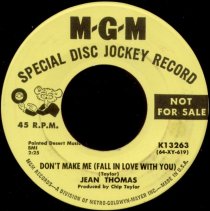
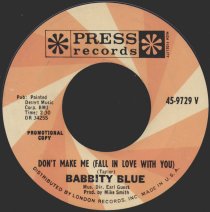
S'POP: Do you remember Jean Thomas?
She was on Rainy Day as well. You wrote and produced 'Don't
Make Me' by her on MGM. This was before Rainy Day, about 1964.
CHIP TAYLOR: She was a sweet, sweet girl. Jean was a background/session
singer. I don't remember even producing this. She probably
did a demo for me of this song and we made it into a recording.
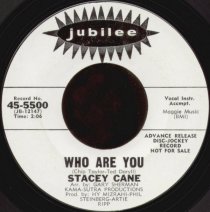
S'POP: This one here - 'Who Are You'
by Stacey Cane, which you wrote with Ted Daryll - is a Kama
Sutra Production. They were a bit of a dodgy crowd, weren't
they?
CHIP TAYLOR: Absolutely (laughs).
S'POP: Where were they based?
CHIP TAYLOR: They were based in 1650 Broadway. A lot of
dodgy characters through that building! I don't really remember
this one, but I would say that a lot of the troubles in the
business were … these were all good guys, but they were
dodgy characters. They would make some kind of deal with the
record company, through the parent company that would pay
the bills, and then they would make deals with their artists,
and this was the Catch 22. They would get a lot of money from
the record company as an advance to making recordings, and
the Kama Sutra [productions] would be distributed through
another big company. They'd pay a lot of money to them and
they'd get big offices, big cars, big houses in the country,
big everything. They'd get a couple of hundred thousand dollars,
and then the artist would record and the biggest problem they
could have is that the artist had a hit, and they'd have to
pay them royalties. They'd have no money - they'd already
spent it on their cars, offices and everything, so they'd
have to find a way not to pay them.
S'POP: Like 'The Producers'? The central
premise: if it's a success, you're really in trouble.
CHIP TAYLOR: That's true. That's the way a lot of these
production companies went.
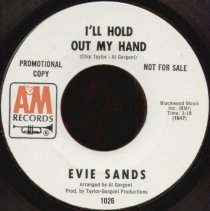
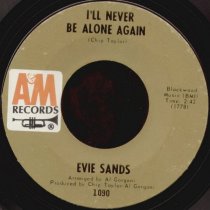
S'POP: Let's talk about Evie Sands.
How did you find Evie?
CHIP TAYLOR: I didn't really find Evie. I just knew of
this young girl, 15-years-old, every once in a while she'd
walk into this dodgy building, 1650 Broadway, and head for
the eighth floor mainly, Teddy Vann's office. I used to see
her. I didn't like the song she was singing, but I heard her
voice - "Wow! This girl can sing!" And she was a
really attractive girl too. I said I'd like to get involved
working with this girl. Then, Al Gorgoni said, "Somebody's
put up some money for me to do some recordings with Evie."
So I said I'd like to get involved with that project and do
some writing with you. So it really came through Al. To me,
as a producer and a writer, you could not have asked for a
better situation. A girl that had a wonderful voice, and for
me - with my background in race records and R&B - a white
girl who could sing like the most magical black girl around.
She had this honey voice that was one of a kind. To me it
was like the ultimate find, just to be working with Evie Sands.
How could you ever not love that, every minute - working with
her, rehearsing with her, producing her. She was a great girl
and she loved the way I wrote, the things that Al and I did
together.
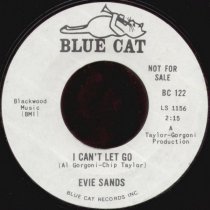
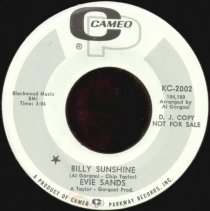
S'POP: Did you do a deal with Leiber
& Stoller?
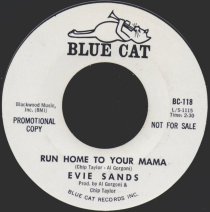
CHIP TAYLOR: Yes, that was fun. The first deal we did
with them wasn't 'I Can't Let Go', it was 'Take Me For A Little
While', the Trade Martin song. I think I was a little nervous
to go over and see them, but we had done the skeleton of the
record and were about ready to put the strings on. We wanted
to find an outlet and thought Blue Cat might be the place
for us. So we went over and had a meeting with them, and got
to know them, and they were great. We played them the track
and they loved it, so we worked on it through them and released
'Take Me For A Little While' with Evie.
And she started her career off as the biggest hard-luck girl
in the music business. Her record was shipped, the test pressing
was sent around to four or five different places. The record
company was hugely excited about it. George Goldner was the
promotion man - the mafia kind of promotion guy that Leiber
& Stoller had working for them. In Chicago, Jackie Ross was
coming off a big hit record on Chess Records, and they were
at a session when somebody brought the test pressing of Evie's
record in and said, "You've gotta hear this record." And they
played it at Jackie's session, on a Monday night. They stopped
the session and they cut the song. On that Wednesday, they
took a full-page ad out, and our record wasn't coming out
until the following week. I opened up Cash Box and I see this
big thing: The next Jackie Ross number one, 'Take Me For A
Little While'. I said, "What a bad break - somebody used the
same title!" Ours was a Trade Martin song. I said, "What the
heck is that!?" Then I got hold of a copy, and it's the same
song! So we traced it. We found exactly what happened with
the test pressing. And so George Goldner called up Leonard
Chess and finally, as the Jackie Ross record was bulleting
up the charts, they had it stopped. It didn't really help
Evie - Evie's record was played maybe in 5% of the places
that Jackie Ross's was, 'cos Jackie Ross was coming off of
a big record. Where Evie's record was played, it was big,
but you couldn't expect the station to stop playing Jackie
Ross and play Evie's instead. So Evie just lost the game.
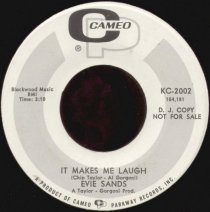
The same way she lost with 'Angel Of The Morning' on Cameo.
When we released her version it was the biggest record every
place it was played - it was a number one request record.
I think they had ten thousand copies, they were all sold in
two weeks, and Evie was gonna head for a number one - and
then the company went bankrupt. So, she was the hard-luck
girl there. Merrilee Rush had the hit. Chips Moman and Tommy
Cogbill cut the thing very much like Evie's record. Those
were tough things for Evie. She was Dusty Springfield's favourite
singer.
S'POP: She's been recording recently.
CHIP TAYLOR: Somebody told me she's out with another record.
We made one record with her ['Women In Prison']. I was just
trying to fit her into what I was doing, the Americana thing.
I wasn't really trying to do what was best for her, I had
no idea how to exploit it.
S'POP: It was a little before its
time, maybe a year or two, because Lucinda Williams has really
come on since. I think ever since that album Evie's been on
the road. Didn't she join some rock band?
CHIP TAYLOR: Yeah, it's a wonderful record. I hear she's
doing something else. She was with our friends from Scotland,
the BMX Bandits, Douglas Stewart. There's the whole connection
with Belle & Sebastian, who are big fans of the stuff
that Al and I produced with Evie back in those days. We did
a show with Belle & Sebastian up in Scotland a few years
ago.
S'POP: Let's move on to Billy Vera
- 'Storybook Children'.
CHIP TAYLOR: He's one of these friends of a friend of
a friend. Through Ted, and somebody else, I got to know Billy
and his band - they were playing around Westchester County
and had a very good reputation. I heard some of the demos
that they had done and, to tell you the truth, I was very
jealous - this guy's got it! He had a song called 'All My
Love' that I felt was terrific. Billy was the real deal. He
had that R&B thing to him, and a pop-ish thing in his
writing. I signed him to April Blackwood Music as a writer
and tried to figure a way to do something and break with him.
I was driving down the highway to work one day - and I usually
don't write like this - and I saw two little kids in the field,
a black kid and a white kid, walking hand in hand across the
field. By the time I hit the city I had this whole thing about
'Storybook Children' - you've got your world and I've got
mine, and it's a shame two grown-up worlds can never be the
same. It was at the time that the race stuff was still fairly
intense. I said to Billy, "Play me those old Joe Cuba
chords that I used to love that you played. I've got an idea
for a song." So he played me this thing. I'm never good
at getting exactly what someone is giving me, because I'm
not sophisticated enough, but somewhere in there, within a
few minutes, we had 'Storybook Children', and I asked Billy
to help me finish it up. But it was almost finished by the
time I got to the city. So we went and recorded it. We were
looking for a girl for it. We had a girl to sing it, but we
weren't thinking she was the right girl. We brought her over
to Jerry Wexler, and played it for him. I said, "I just
need money to put strings on it, and find the right girl."
He said, "I got two or three girls for you to pick from."
Judy Clay was one of them. He got us together with her and,
basically, we made a deal with Atlantic Records for that.
They ran a tight ship over there … We shook hands on
a deal, and walked back to my place of work, and Jerry called
me on the phone and said, "Look. I've decided, I want
to change the deal a little bit." "What do you mean,
Jerry, we shook hands on a little deal. You're gonna put up
$2,500 for the strings. We'll put the strings on it. We're
gonna get Judy Clay, we'll make a hit record. How simple can
this deal be?" He said, "Well, how about you put
up the $2,500 for the strings, and I'll give you another two
points?" I said, "You have to be kidding me, Jerry!"
So that's the way it ended up.
S'POP: Another two points - would
that have been a better thing or not?
CHIP TAYLOR: No. It's the same as 'The Producers' thing. You
don't get the money, 'cos by the time you get the hit, you're
into making an album, and then all the money you would have
got is in the album. And then by the time you're ready to
pay for the album, you're into making another album. So you
never get the money. The only people who make the money are
the songwriters, because they get paid, whether it's an advance
or not, whether they paid for the strings or not. For the
most part those artists didn't get paid, and if somebody came
in and complained - one of those artists on Atlantic Records,
or the doo-wop groups - they'd say, "Oh, by the way,
we got you a Cadillac."
S'POP: Ruth Brown died recently. In
some of the obituaries they mention her activity in getting
restoration for black artists. One obit refers to Atlantic
as "the house that Ruth built".
CHIP TAYLOR: There was so much energy going on with those
artists who didn't get paid, and so much good efforts for
them to promote their own things, I think the companies should
just wash those things. If these things are selling again,
then pay a little bit of royalties to them.
S'POP: I read somewhere that Billy
did 'Storybook Children' first with Nona Hendryx?
CHIP TAYLOR: Yes. That's the one we did first. We brought
it to Jerry Wexler with Nona on it, but we weren't sure it
should be Nona. We weren't convinced we had the right girl.
Jerry said right away, "We've got to find somebody better."
So Jerry was the one who gave us options, and Judy Clay was
one of the options.
S'POP: It really took off, that record.
CHIP TAYLOR: It took off on the East Coast. It was a funny
thing, we had two singles with them - Billy and Judy - and
they were the first inter-racial couple, and the first to
play the Apollo Theater. The second release, 'Country Girl
- City Man', became a big southern record, and 'Storybook
Children' was a big East Coast record.
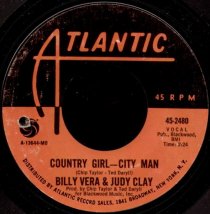
S'POP: Was 'Country Girl - City Man'
a tailor-made follow-up?
CHIP TAYLOR: I don't know if it was a tailor-made follow-up.
It was a song that Ted Daryll and I wrote and it sounded like
a really good thing for them. I didn't think about hits back
then. I thought about it after the fact, not to sit down to
write a hit.
S'POP: So you never wrote with particular
singers in mind?
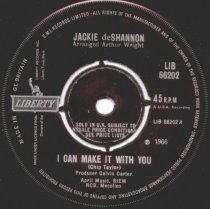
CHIP TAYLOR: Hardly ever. 'I Can Make It With You' I wrote
because somebody asked me if I could write a song for Jackie
DeShannon. So I wrote that thinking about her. Most of the
time I asked my company not to ask me questions like that,
or not point me in those directions, but I must say that whenever
they did it made me feel good.
S'POP: What strikes me about your
songs is most of them are by female performers. You seem really
good at writing songs for female performers. Not many writers
can do that.
CHIP TAYLOR: David Olney says, "What's wrong with
you? You're always writing for girls, from a girl's point
of view? Don't you have a man's point of view?" One day
I made a joke about it - maybe it's because I like to write
songs where a girl's told me something I want to hear. I put
words in their mouths, and say, "OK, I like to hear that."
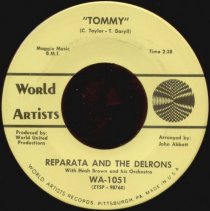
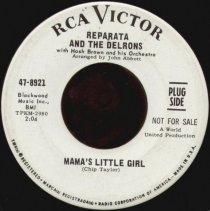
S'POP: Reparata & the Delrons
did a couple of your songs - 'Tommy', that was a bit of a
hit.
CHIP TAYLOR: I don't really remember it. I wish you could
play these, I'd have some fun listening to 'em.
S'POP: We've put most of them on a
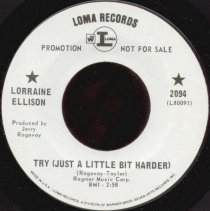
CD for you, so you can listen to them later … 'Try (Just
A Little Bit Harder)', that's a great one.
CHIP TAYLOR: There's an interesting story about this one.
Jerry (Ragovoy) and I had written a song called 'Try', an
Otis Redding-ish kind of ballad. for Garnet Mimms. Then one
night Jerry said, "Can you turn 'Try' into an up-tempo
song? I need it for Lorraine Ellison." He said he needed
it by the morning. That morning - my bookie for some reason
was out of town - I'd planned on going out to the racetrack
to bet a horse, and it was a very important bet to me. I said,
"I don't know if I can do it. What time are you going
to be in the office?" He said, "Around 10 o'clock."
So, I went home that night, I picked up my guitar and I started
singing one of my favourite songs that I've ever written,
and it's never been the big hit that it should have been,
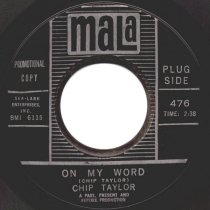
'On My Word'. This song is a story in itself, a total chapter.
I took the groove of 'On My Word', and I started force-feeding
lines from 'Try' into it, until it took its own shape. Then
'On My Word' was out the window, and 'Try' was there. I wrote
it out a little bit more in the morning, wrote out the words,
got in the car, walked down to Jerry's office and I played
it for him. He liked it. He put his tape recorder on, wrote
some notes down, banged on the piano - I had that little horn
section in it that I wrote for it. He said, "Great!"
I said, "OK, see you - I'm off!" And I went out
to the racetrack to bet my horse. Then I heard that Lorraine
had cut it, but I didn't even hear her version of it, because
I was on to something else - some other horses, some other
music. One day I was driving in the car, the DJ said: "The
new Janis Joplin single ..."
You know, I have to get going, I have to get packing my clothes.
We'll have to do this in part one and part two, yeah? We have
a show tonight in Buckingham. We're supposed to all meet down
here in the lobby at 12, and it's after 12 now. Three more
shows, then we're off to Europe. Set part two up with Florence
for when I'm back in town, or we can do it over the phone.
Boys, I'm headin'.
* * * * * * * * * * * * * * * * * * * * * * * * * * * * * * *
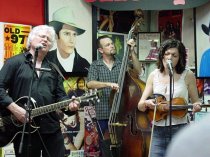
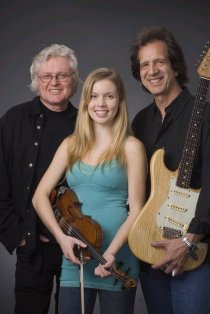
We pick up, as promised, eight months later. This time Chip
is accompanied by the rest of the Train Wreck Revue: guitarist
John Platania and fiddler/singer Kendel Carson.
S'POP: Last time we talked, you told us that you generally
didn't write songs for specific artists, but there's a song
that Peggy Lee did …
CHIP TAYLOR: 'Sneakin' Up On You'?
S'POP: Yes. It sounds so Taylor-written for her.
CHIP TAYLOR: No, it wasn't. I got this little groove with
it and my friend Ted Daryll and I worked on it together. I
liked the little groove, a cool little groove. I didn't know
what we were going to do with the thing. It was like "I'm
a one-eyed cat, sneaking round the corner, trying to get to
you." I can't quite remember, something like that, but
it was a cool, sexy little thing. One of the guys in the office
made the decision to play it for her. I didn't.
S'POP: Well, it was a good idea, because it turned out a
really great record.
CHIP TAYLOR: That was one of the great things about the company
I was with. It had a wonderful professional staff that truly
loved the music that was coming in and really worked hard
to find artists for the songs.
S'POP: That was April Blackwood Music?
CHIP TAYLOR: Yes. And David Rosner was the guy that was the
real hero of that company. He was just wonderful, so passionate
in everything. They did great. They got ideas right away for
my songs and they were excited about them. You couldn't ask
for better surroundings.
S'POP: You were responsible for finding and signing other
writers too?
CHIP TAYLOR: Yeah. Right away, I brought in Al Gorgoni, who
was my partner at the time. I wanted to write with him a little
bit, so I brought him into the company. And I brought Billy
Vera into the company. I always liked Billy. I was always
jealous of Billy. I thought he wrote some cool things that
I couldn't write. I was jealous of one particular song of
his, but I can't remember what it was. And then I brought
James Taylor in. That was the big thing.
S'POP: Do you remember a young lady called Fangette Willett?
CHIP TAYLOR: I can remember the name.
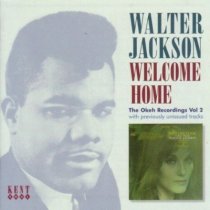
S'POP: She wrote this great song for Walter Jackson, 'It's
An Uphill Climb To The Bottom'. [Gives Chip a copy of Walter
Jackson's 'Welcome Home' CD.]
CHIP TAYLOR: Ah, it's great to have this. You can't imagine
how much glad I am to have this. 'Welcome Home' is one of
my favourite songs I ever wrote.
S'POP: Which do you like best, the Walter Jackson version
or Garnett Mimms? A tough call, that one!
CHIP TAYLOR: I like Walter's a little bit better and I like
Dusty's version. She had a great version of it. Walter Jackson
used to perform on crutches. He was truly one of the great
soul singers of that generation. He wasn't like a performing
soul singer, he felt this stuff. He would reach the masses
in the way he performed. Garnett Mimms was great, but he was
more over the top. Walter had a certain sadness to his whole
way of singing that was wonderful.
S'POP: Fangette told us that when she first met Walter he
had a residency at some jazz club or something?
CHIP TAYLOR: Is that right? I didn't meet him.
S'POP: You didn't meet him?
CHIP TAYLOR: No. I was kind of behind the scenes at most
times. I wasn't hanging out in the music business. I was married
to Joanie and, having the kids, I wasn't so typically in the
business running around. I would just go in, write my songs
and come back.
S'POP: You were a nine to five-er?
CHIP TAYLOR: Well, a bit more than nine to five, because
I spent about four hours handicapping the horse races for
the next day. So it was a double job I had, just like you
guys! But right now, this is an amazing time for me. I think
back to the time, there was so much energy floating around
in those days. We were taking over the business. But now,
the way we're on tour, and what we're doing with John [Platania]
and Kendel [Carson], there's new energy going on around here.
We don't know where it's taking us, but with that band, there's
wonderful stuff around.
S'POP: How long have you known Chip?
JOHN PLATANIA: Since 1972.
S'POP: Was that with Flying Machine?
JOHN PLATANIA: It was way after that. I never knew Chip with
Flying Machine.
S'POP: You weren't involved with Flying Machine?
JOHN PLATANIA: No. Sometimes, people say that I was, but
I never worked with James Taylor in my life. I don't know
how that connection came about.
S'POP: You were with Bang Records?
JOHN PLATANIA: Yes, I was signed to Bang Records.
CHIP TAYLOR: That's around the same time as all that stuff.
John was doing this stuff with Bang and I was doing my other
stuff. All of a sudden, when I decide for a solo career, John
enters the picture and from then we knew each other.
S'POP: So what were you doing with Bang?
JOHN PLATANIA: Bert Berns signed a group I was in, Silver
Bike. I had never met Bert, though. I came in, they made the
deal. I just signed the deal with that group and Bert died.
So that was it for everybody. Van [Morrison] left too about
the same time. He was sort of run out of town.
S'POP: That would have been '67 or '68?
JOHN PLATANIA: I was '67. I think Van probably left some
time that year.
S'POP: Bert died at the end of '67.
JOHN PLATANIA: Bert brought Van in from the UK.
S'POP: Just Us. That was you and Al Gorgoni?
CHIP TAYLOR: The way that came about was I loved this song
that Al wrote with Estelle Levitt. I loved working with Al,
period. He wrote this little song and asked me to help him
demo it - 'You Can't Grow Peaches On A Cherry Tree'. We demoed
it. It sounded like it would work as a nice duet, so we demoed
it singing it together. So I was kind of producing it with
Al. We got it back from the studio and I said, "This
sounds like a hit to me just the way it is." He said,
"I think it needs another harmony." So I went back
in and did another harmony on it. A guy was in town from Minute
Man Records from Boston. He had done something else with April
Blackwood and he heard it. He said, "I think this sounds
like a hit." And I put it out on their label. To make
a long story short, we put it out on Minute Man and it broke
so fast that Al and I were rushed into the studio to do an
album as the thing was going up the charts. Minute Man couldn't
handle it. It was so big and they were just a little label
in Boston. So they sold it over to Colpix. They sold 60,000
on Minute Man and then 200,000 on Colpix. Colpix was going
bankrupt, so they sold it to Kapp. So, it was a big selling
record. It probably sold 600,000 or 700,000 singles, but its
chart position was smaller than it would have been had it
been on the one label. So it got into the top 40 or something.
S'POP: It was played on BBC Radio recently. They said Al
was in the band.
CHIP TAYLOR: We never really had a band, just studio musicians.
And Al was the one who didn't really want to go on the road.
We ended up doing the Dick Clark Show and all those things.
S'POP: So you [John] get signed and the guy who signs you
dies. You [Chip] get a hit and the record label goes bust.
That's the business, isn't it?
CHIP TAYLOR: Things like that happened a lot in those days.
S'POP: What was the atmosphere at Bang Records like when
Bert died? Doom and gloom? The label carried on for many years.
JOHN PLATANIA: When Bert died we did go in with his wife,
Ilene. She was trying to figure out where to go from that
point.
S'POP: She was involved in the business?
JOHN PLATANIA: Oh boy, was she was involved.
S'POP: I don't know much about Ilene.
JOHN PLATANIA: Well, I won't go into anything. She's almost
an untouchable woman. Considering the fact that Van Morrison
never got any royalties from 'Brown Eyed Girl'. She's a tough
woman. But, from what I remember, she was completely in control,
absolutely in control in business, and remained so, until
recently, when Sony bought Bang. Maybe it was at that point
that Van got royalties. My only association was at meetings,
which I remember one or two times, with Ilene, and going into
a studio with Chris Houston from the Undertakers, the British
band.
S'POP: He became an engineer.
JOHN PLATANIA: He did Zeppelin, the Who, War. He did all
that stuff. Now he's in Nashville - a studio designer, a great
engineer.
CHIP TAYLOR: The thing about Bang - it may turn out to be
one of these labels that didn't treat people right, or whatever,
but the energy of Bang reminds me of a similar energy from
the tough stuff, the darker stuff, like Atlantic Records or
something. There were certain people doing poppy things -
real keyboard oriented things - and certain people doing gut-felt
things. Solomon Burke was one of those - he could do it. It
was nothing about precision. Bert just wanted an organic thing
going on in the studio.
JOHN PLATANIA: He was a good writer too.
S'POP: John, did you play in bands?
JOHN PLATANIA: Yes. Once I was in New York I started doing
some studio stuff with Mort Shuman, a couple of things with
John Cale, nothing big. But I was still Upstate, working with
bands. I was working with a trio, which is when Van's people
saw me and asked me to audition.
S'POP: Did you know Van through Bang?
JOHN PLATANIA: I kind of knew him. I think we'd met once
or twice. We crossed paths. At that point I knew 'Brown Eyed
Girl'. I knew Them's stuff. But beyond that, no. When I really
connected with Van was after 'Astral Weeks', before 'Moondance'.
He had left New York to go to Boston, where he landed after
leaving Bang. He had to leave town - literally - because he
was coerced. He didn't want to fulfil his obligations because
he wasn't getting any money.
S'POP: I've heard a couple of outtakes he did.
JOHN PLATANIA: They put an album out of all that. They didn't
like that at all. They didn't finally release it - hysterical
stuff!
CHIP TAYLOR: He wasn't getting paid, yet he had obligations
JOHN PLATANIA: 'Ring Worm'! Quite clever titles, as funny
as can be. They were just right off the top of his head.
CHIP TAYLOR: So they were saying he was not doing the right
thing by the contract, but on the other side, they weren't
paying him any money.
JOHN PLATANIA: Nothing.
CHIP TAYLOR: So, that's just like the old kind of record
company.
JOHN PLATANIA: I mean, he was starving. Anyway, they pressured
him out. They said, "Either do this, or…" I
don't know what the details were. He wound up in Boston and
somehow his managers at some point signed him to Warners.
From Boston he moved to Woodstock.
S'POP: You worked with John Cale?
JOHN PLATANIA: I don't remember what, I know it was a couple
of tracks.
S'POP: Pre-Bang, or afterwards?
JOHN PLATANIA: Post-Bang.
S'POP: So once you'd left Bang you went solo?
JOHN PLATANIA: Yes. I did various studio things.
S'POP: You still play with Van Morrison.
JOHN PLATANIA: Yes. For over a year now, we reconnected.
I've always been in touch. He's always trying to get me to
move here, but I don't want to do that right now at this point.
S'POP: Does he gig much these days?
JOHN PLATANIA: More than ever, in the States and Europe.
I played with him at Montreux.
S'POP: Chip, what about the label you started up, Rainy Day?
CHIP TAYLOR: That was Al and I. We started it up for was
James Taylor, totally for James. A friend of mine, Mickey
Eichner, ran Jubilee Records and we were telling him about
James. So Mickey offered a deal with Jubilee. The nice thing
was they gave us a little studio - a little hole in the ground,
but it was free. So, any time we wanted, we could just go
in there and do experiments. That's how we started. We did
all the early James Taylor things at that studio. The first
thing James put on the tape in that little studio was "Hey
mom and dad, this is my first rock'n'roll record!" The
whole deal with that was that I went to the label and I said
to them, "Look, we've got this great artist. He doesn't
sound Top 40. He's going to get difficulty getting played
on the radio. Let's put an album out by him and do like the
blues thing. He's been playing in a New York club called the
Night Owl. If we could just do this in three markets. We could
do a folk/jazz concept with him." This was '67 or '68.
They almost did it. That would have been great, but their
thing was, "Let's do singles." Nobody wanted to
do albums. My brand new concept was to try him in a different
way. We had meetings and meetings and they finally said, "No."
James was heart-broken and I was heart-broken and he left.
S'POP: You put some other singles out on Rainy Day. You did
one yourself.
CHIP TAYLOR: Two or three, I think.
S'POP: 'You Should Be From Monterey'.
CHIP TAYLOR: Yeah. I liked that.
S'POP: So, you let the label fizzle out?
CHIP TAYLOR: Once James was not there the heart of it was
gone. Once I didn't have a good concept to think back and
forth with the label, it wasn't worth it.
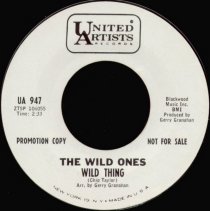
S'POP: We didn't want to dwell on 'Wild Thing' earlier, but
we did want to ask you about the Wild Ones, the group that
did it first. Were they a real group?
CHIP TAYLOR: Everyone's trying to get hold of a copy! Yes,
Jordan Christopher and the Wild Ones, they were a real group.
S'POP: Did you produce it?
CHIP TAYLOR: No, I had nothing to do with it. Gerry Granahan,
head of A&R at the record label, asked me for a song for
them. And that kind of inspired me that day to start thinking
about writing another song and 'Wild Thing' came out.
S'POP: Did they name themselves before the record?
CHIP TAYLOR: Jordan Christopher was the head guy and his
group was the Wild Ones. They'd been floating around, but
I didn't really know them. No one really knew them.
JOHN PLATANIA: Sybil Burton started to all intents and purposes
the first disco in New York. Jordan Christopher's band, the
Wild Ones, was the house band with this disco. I played there
myself.
S'POP: Was that The Scene?
JOHN PLATANIA: No, it was called The Office. It was around
57th Street. I played there, so I pretty much know that scene,
while I was signed to Bang. The Scene was really a listening
venue and Arthur's was the first disco in New York. Other
than in LA, there was nothing in the States other than those
two places. Chip played me the record. It had strings and
stuff on. It was terrible!
CHIP TAYLOR: Gerry Granahan was such an instigator for the
thing for me, so I never want to say anything bad. All the
records in the late '50s and '60s were done by arrangers writing
out every note for every player. So, when you walked into
a session, most of the time it was with strings and horns
and stuff. So it was like Sinatra, finally winding down to
rock'n'roll. Even though it was coming into rock'n'roll, there
were always still going to be some string players around.
There were still going to be notes written out for the drummer
to play every beat and for the bass player to play every note.
So, with 'Wild Thing' it's the strumming. The guitar is almost
like a little bit of a percussion instrument. When they recorded
it, they didn't do any of the in-between things. It just meant
nothing! It didn't get the power of the song. They took the
power of the song and they diminished it. I don't blame Gerry,
because he was used to doing those kind of things. Everybody
did it, arrangers. We were just starting to say on sessions,
"No arrangers." I would arrange the string parts
if I was going to do it. I wouldn't let anyone else do the
arrangements and I would not touch the rhythm section until
we got to the studio and just fooled around and there would
be nothing except the chord charts around. Nothing other than
that.
I think the Troggs' record was a right funky record. You
couldn't beat that. It was like the demo, except they played
it with an electric guitar. The feeling was exactly the way
it should have been. To me, that was the start of punk.
S'POP: And the Troggs have the ocarina
CHIP TAYLOR: Well, the ocarina was something Reg Presley
thought was on my demo, because my engineer did this thing
with his hands. When the demo was being played back, Ron Johnson
was going whistling. I said, "Hey Ron, can you play something
like this?" I hummed. He did something close, we over-dubbed
on it, and that became the thing that everybody who heard
the demo thought was an ocarina.
S'POP: Have you still got your demo?
CHIP TAYLOR: Oh yeah.
S'POP: Still got all your old demos?
CHIP TAYLOR: I got a lot of them. I've saved 'Wild Thing'
on to a tape, so that will never be lost. Reg Presley carries
an ocarina with him all the time, in his back pocket, when
he comes to one of my shows, in case I call him up on stage,
he has one.
S'POP: I think "Wild Thing" sounds better with
a fiddle! [as played at the previous evening's gig]
KENDEL CARSON: I'm just trying to step up for John!
S'POP: How did you and Chip meet?
KENDEL CARSON: Chip and Carrie [Rodriguez] were playing at
the Canmore Folk Festival, near Calgary, Alberta. I was playing
there with a band called the Paperboys. Carrie and I were
doing a fiddle workshop stage together. There were about six
fiddlers on stage. We said "Hi" to Chip after that
one. I didn't know who he was at that time. I remember very
clearly walking back to the guys in the Paperboys. They said,
"You know who you're just talking to? That's the dude
that wrote 'Wild Thing'" I said, "That's really
cool!" I kept running into Chip and Carrie there, and
our bands were playing at the Edmonton Folk Fest, which is
a really fun festival, it's big. And so we just got to hang
out for a while and really got along. By the end of the festival
Chip and I exchanged our addresses. He asked me if I made
records and could I send him something to see what he thought.
He's easy to talk to and easy going. I thought it couldn't
hurt and who knows? So we went back and forth a bit and he
ended up saying, "Why don't you come up to New York and
try to do some writing?" I was over the moon about that,
so I came out. The plan was to hang out and write for 10 days
and hopefully cut some demos at the end after two days in
the studio. And it was insane. It ended up Chip wrote a bunch
of stuff even before I got there. I showed up and he already
had six songs written. We went back and forth on a couple
of songs, a couple of co-writes. And we went into the studio
and just recorded thirteen tracks in two or three days. We've
kept in touch since then.
CHIP TAYLOR: It's an amazing thing. One of the things was,
aside from whatever you say of her talent, she had a certain
energy that I really liked. There's a spirit about her. When
she came up to New York it wasn't just about saying, "OK,
you're perfectly talented, let's just get a couple of songs
together and record them." It wasn't that. It was trying
to find a thing that would be her, a new energy for her. That
was part of what we worked on. That new energy came so fast
that week, it was just magic. So she came with, totally as
a writer, and what she left with was like a milestone of work
and energy. So to me it was like one of those magic things
when somebody just blossoms into something. The girl that
walked up to the studio and met me in New York - the first
day she met me she could never have walked into that studio
and sang thirteen songs with a band and made it feel anything.
The girl that did it made it feel everything.
KENDEL CARSON: It's amazing.
S'POP: Your brother is a player as well. Is he older or younger?
KENDEL CARSON: He's about two years older
S'POP: Do you play with him?
KENDEL CARSON: We haven't been doing so much recently, but
we grew up playing all the time together. He's a fiddle player
as well, so we do the natural twin fiddle stuff.
S'POP: Chip, do you have your own studio?
CHIP TAYLOR: I do have my own studio. I don't do much work
in America. The guy who plays bass with John and me - Tony,
a great bass player and friend of John's - he's in the studio
more than I am, getting old things together. Normally, what
I'll do is I'll record stuff in New York with John and Tony
and then, if we need to work on it, sometimes up in my studio
we'll do that. Times are shifting now; there's not so much
of a need for studios as there was.
S'POP: I've got a bit of a thing about the recording studios
in New York in the 1960s. I think some of them had their own
sound. Does that still apply?
CHIP TAYLOR: It sure did back then. I'm not sure about now.
S'POP: Because of the studios or because of the engineers?
JOHN PLATANIA: The engineers, the equipment. They had the
need to come up with this equipment to capture the sound being
created.
CHIP TAYLOR: Also the rooms. I think back in those days they
had more significance …
JOHN PLATANIA: Absolutely! The RCA studios, Stax studios,
Sun studios, Gold Star.
CHIP TAYLOR: … than they do now. Now, if you're going
into these digital things, the room and the sound becomes
less and less of a thing. Unless you capture a certain kind
of engineer who's attuned to that. Listen back to 'Gasoline'
[CT solo album from 1972]. We did that at Bella John's and
the sound of that is so analogue and live.
S'POP: Currently, there is a bit of a move, there are some
bands that are trying to do that. Little places in London,
analogue studios, using vintage equipment, with people queuing
up to record. The White Stripes, for example. And one that's
making a bit of a noise is James Hunter. He sounds like early-'60s
King Records, the way he sings and plays.
JOHN PLATANIA: Howlin' Wilf?
S'POP: That's the guy
JOHN PLATANIA: He's a very specific R&B style. Very good.
It's consciously capturing a specific R&B thing.
S'POP: I did a little interview with Brooks Arthur last year.
Do you know him?
JOHN PLATANIA: No. I know who he is.
CHIP TAYLOR: I know him. Brooks is one of these guys that
was like, he didn't know more than other engineers. He might
have known less. But, what he would make up for from being
on the same page with you, with energy, was unbelievable.
He'd be one of these engineers, I'd say, "This is a crescendo,"
and he'd be on the board. He'd stand up like playing an instrument.
So it was nice to feel like that the guy was on the same page.
Probably standing up and doing all this vibration didn't mean
much. I didn't know what he was doing. He was moving at the
same time and wanted something very important to happen. A
great guy!
S'POP: What about your work as producer in the early days?
CHIP TAYLOR: I was an organic kind of producer. I was always
fighting for emotion. That's what I was best at. I wasn't
a technical producer. I knew what I wanted things to sound
like, but I wasn't an engineer, so I didn't know how to get
them. But I knew what I didn't like and fought hard to get
what I liked.
S'POP: Did you have a studio of choice, a favourite one?
JOHN PLATANIA: Bell Sound was quite a big studio.
CHIP TAYLOR: I liked Bell. I did 'You Can't Grow Peaches
On A Cherry Tree' at Associated and I liked that folk recording.
I liked Dick Charles for all the little demo things I did.
It wasn't really a thing where I just loved a studio. I liked
a lot of studios. If we got the right engineer we always felt
comfortable. It was mostly the engineer.
S'POP: I went to New York a couple of years ago and I went
'round all the addresses where the old studios used to be.
Some of them are still there. Different names, but still there.
Some of them are a demolished, some of them are car parks.
I think the one that used to be Dick Charles is still there
and is still a recording studio. It does TV jingles.
CHIP TAYLOR: [Looking at his 'Last Chance' album] I reissued
it, but I didn't do the right job with it
JOHN PLATANIA: You didn't master it from the same tapes?
CHIP TAYLOR: I mastered it from a two-track I had, not a
half-inch. They didn't want to go through the whole Warner
Brothers thing of buying it out. Someone was trying to do
me a favour real quick. I didn't like what we did with it.
Next time we master it we're going to master it from the vinyl,
scratches and all.
KENDEL CARSON: [Reading the LP liner notes] Guitar and fiddle?!
I never knew Chip ever played the fiddle.
JOHN PLATANIA: He resurrected the fiddle in spite of his
brother's contradictions.
S'POP: I wanted to ask you about your work as a solo performer.
You did the work with Al, Just Us, but when did you decide
to start out as a solo performer? What brought that about?
CHIP TAYLOR: Well, I always wanted to do it. I'd been comfortable
behind the scenes writing songs for a while. The taste I had
from working with Al, having a hit record and having Al say,
"I don't want to go on the road," Then I was thinking,
if I do it myself, I'm scared of the road, I'm scared to perform.
I was less scared when I was in high school. By then, I was
scared, but I wanted to try it.
S'POP: But in high school, it was with a band.
CHIP TAYLOR: I was the lead singer. I was less afraid then,
for some reason. I came back with 'Gasoline'. I was as nervous
as hell to get on stage. I was scared.
S'POP: So it was just yourself?
CHIP TAYLOR: And whoever. I had some people playing with
me. It was nerve-wracking for me, but I wanted to do it.
S'POP: When you were working in New York, in the writing,
did you still perform?
CHIP TAYLOR: No. Played on my own.
S'POP: Sat in your kitchen?
CHIP TAYLOR: Wherever. Worked on my racing form. Wrote a
little bit. I didn't hang out in the city.
S'POP: John, how's your album ['Blues, Waltzes & Badland
Borders'] doing? It's got some good reviews.
JOHN PLATANIA: Review-wise, it's doing fantastic. It's really
pleasantly surprising.
S'POP: This is your first solo?
JOHN PLATANIA: Second. The first was less than a year before.
This record, on Train Wreck, has taken a while to do. Only
because we'd stop, record it, shelve it for a few months,
then start in again. It's taken quite a while.
S'POP: I like the tracks I've heard. It works well with the
different vocalists you use.
JOHN PLATANIA: It's almost an instrumental album.
S'POP: Do you call it an instrumental soundscape?
JOHN PLATANIA: Soundscape's great. I immediately saw the
cinematic elements of the whole thing.
CHIP TAYLOR: I've heard that Jonathan Demme - he was in the
audience - heard John and Kendel perform at the South by South
West Festival in Austin. He licensed three songs from John
and Kendel for his movie, a documentary about President Carter.
He's licensed them and then he has to put it together, so
we don't know what the final thing will be. But he loves them
and there's a good chance that John will be a part of that.
S'POP: Who have you got singing on the album?
JOHN PLATANIA: Lucinda Williams is singing. Then there are
various narratives. Chip's brother Jon (Voight). There's a
children's chorus. Alejandro Escovado. Ruben Ramos, who was
lead vocalist for Los Super Seven.
S'POP: How is Alejandro?
JOHN PLATANIA: He's doing OK.
CHIP TAYLOR: He's never found a good releasing structure
for his records over here. With a bigger company, they don't
much care. It's not like going on Train Wreck, where everybody
cares. Alejandro, and even Lucinda Williams, when they're
on a major label, they're competing with the monsters. If
they're not going to be up there selling 300,000 or 400,000
records, they're going to get some lip service, but not the
real passion of the label.
S'POP: How long are you in the UK for?
CHIP TAYLOR: Until tomorrow morning.
S'POP: Have you done much radio here?
KENDEL CARSON: No. We did some things in Sweden and Europe.
CHIP TAYLOR: Kendel's record ['I Like Trucks'] is getting
so much radio support here. Her record is breaking.
KENDEL CARSON: Danny Baker (BBC Radio London) is playing
it, every day for ten days. Johnnie Walker (BBC Radio 2).
Somebody told me that Danny Baker said, on his show, "I'm
going to say this one time: Kendel Carson." He played
the song, then he played it the next couple of days, and he
never said a word before or after it. Johnnie Walker said
that he heard it on Danny Baker's show, that's why he started
playing it.
CHIP TAYLOR: He's doing a little trick with it. A mystery
thing. That's the nice thing about Kendel's record. It's not
your typical country power pop record, yet people here in
this town and DJs will hear it and love it. It doesn't have
to be power for them, it's got the song. It's just a cool
little record, and I don't think it would get the same treatment
in the States.
S'POP: We were saying after last night's gig, you were right
to play it twice.
KENDEL CARSON: It was funny! Doing it twice, hilarious!
S'POP: We don't use the word "truck" in England,
it's "lorries". It gives it that snappy little title
- it's foreign, exotic.
KENDEL CARSON: I never thought of that! "Lorries"
doesn't have the same kind of …
S'POP: Kendel, do you listen to much English fiddle music?
There's a young woman fiddler and singer, Eliza Carthy.
KENDEL CARSON: One of my buddies is her boyfriend right now.
She's good. Canadian fiddle music is influenced a lot by English
folk music, and Scottish. The Cape Breton music is almost
Scottish sounding, and the West Coast is more Irish, and possibly
more English as well.
S'POP: I once saw Ashley McIsaac. He was wearing a kilt and
a Mohican haircut.
KENDEL CARSON: He's an East Coast fiddler, a punk fiddler.
CHIP TAYLOR: Just to give you a little advance about the
new thing. It will be coming up in the next year and you guys
are the first ones to know about it. There's going to be a
concept album with the entire band. It's going to be a pretty
big adventure. Not just recordings. It's going to be John,
Kendel and I doing vocals that inter-weave with each other,
different kinds of songs. Sometimes it'll be John and I, sometimes
Kendel and I, sometimes the three of us. Drifting back into
the spirit of why we are in the business in the first place.
It's going to carry a lot of weight for us, and the band is
going to be very much part of it. So it's going to be a band
concept. We're doing demos for it today. It's all stuff that's
been written in the last week or so. So I'm really excited
about the project. We're going to work on it together.
S'POP: It sounds exciting. Last night, what came across was
that you were working as a band. It was the Train Wreck Revue,
but you were playing together, playing things from your own
albums and careers.
JOHN PLATANIA: We wanted to minimise the "revue"
concept.
CHIP TAYLOR: We have a bigger thing coming, next year, that
will make more sense.
S'POP: You'll take that show on the road?
CHIP TAYLOR: For sure. It's going to be an important thing,
on many areas, not just recordings.
S'POP: Are you writing together?
CHIP TAYLOR: I've written a bunch of things to get started
and we're going to collaborate.
S'POP: And you're carrying on with your solo careers as well?
CHIP TAYLOR: Yes. One of the things that makes the project
exciting is that John's record is out there now - it's a record
for all time. We don't want to be filling it up with another
album right away. The same with Kendel's album. We don't want
to put this one out and then come with another within six
months. Their albums are way too important. But this other
thing, this group thing, won't interfere with that. And then
we can slowly get ready for what they're doing next, without
being too pressured to be back in the system. And some of
the things that we're going to be doing are going to be featuring
John and Kendel.
S'POP: How do you fit in with the country music establishment?
CHIP TAYLOR: We don't fit in with them. We have nothing to
do with them, except for the fact that maybe they're coming
more toward our way, but it's nothing I want to play, any
of those kind of things. They're still playing pretty powerful
pop, selling soap box kind of stuff.
S'POP: Do you think that's always been the case with yourself?
In your career as a writer, maybe too soul for the country
field, and too country for the pop field?
CHIP TAYLOR: That was more when I was a singer. When I was
a writer, I had no problems with the kind of music that was
being done back then. There was the Brown Family and Eddy
Arnold and Waylon and Willie. There was some politics going
on, but still wonderful records being made. So, having been
part of that scene, it was great. I just got further away
in the '70s, and then in the '80s and '90s it was nothing
to do with us.
S'POP: Country music stations today don't play people like
Eddy Arnold anymore, unless it's an oldies station.
CHIP TAYLOR: If you listen back to those recordings, they're
just nice recordings. In the '50s and '60s there were a wealth
of things that were brilliant and very soulful, but they just
got more plastic as the day went on. We're back doing soulful
things. If people like it, they like it. Now they like trucks!!
S'POP: They like lorries!
CHIP TAYLOR: People say, "You've gotta another 'Wild
Thing', Chip!"
S'POP: The hook is the "1-2-3-4!"
KENDEL CARSON: It's a huge part of it.
CHIP TAYLOR: The simplest things.
|